

-
1 it is difficult to assess these effects numerically
Математика: трудно оценить эти эффекты количественноУниверсальный англо-русский словарь > it is difficult to assess these effects numerically
-
2 we might expect that all these effects will occur prior to ...
• мы могли бы ожидать, что все эти сдедствия будут иметь место до...English-Russian dictionary of phrases and cliches for a specialist researcher > we might expect that all these effects will occur prior to ...
-
3 effects of the electrical arc on human beings
воздействие электрической дуги на человека
-
[Интент]Параллельные тексты EN-RU
Effects of the electrical arc on human beings
From the above, it is evident that the electrical arc represents a hazard source for people and goods.
The hazards to which a person is exposed due to the release of energy generated by an arc event are:
• burns;
• injuries due to ejection of materials;
• damages to hearing;
• inhalation of toxic gases.
Burns
The high temperature levels of the gases produced by the electrical arc and the expulsion of incandescent metal particles may cause more or less severe burns to people.
Flames can cause all degrees of burn up to carbonization: the red-hot solid bodies, such as the metal fragments of the assembly involved, cause third degree burns, superheated steam causes burns analogous to those by hot liquids whereas radiant heat generally causes less severe burns.
Injuries due to ejection of materials
The ejection of metal particles or other loose items caused by the electrical arc can result in severe injuries to the weakest parts of the human body as, for example, the eyes.
The materials expelled owing to the explosion produced by the arc may penetrate the cornea and hurt it.
The extent of the lesions depends on the characteristics and on the kinetic energy of these objects.
Moreover, the ocular region can sustain injuries to the mucosa because of the gases released by the arc and the emission of ultraviolet and infrared rays can injure the cornea and the retina depending on the radiation wavelengths.
Hearing
As already mentioned, the electrical arc is a real explosion, whose sound may cause permanent injuries to hearing.
Inhalation of toxic gases
The fumes produced by burnt insulating materials and by molten or vaporized metals can be toxic.
The fumes are caused by incomplete burning and are formed by carbon particles and by other solid substances suspended in the air.
[ABB]Воздействие электрической дуги на человека
Из сказанного выше совершенно очевидно, что электрическая дуга является источником опасности для людей и имущества.
При высвобождении энергии электрической дуги человек может подвергнуться следующим опасностям:
• получение ожогов;
• повреждения от выброса продуктов горения дуги;
• нарушение слуха;
• вдыхание ядовитых газов.
Ожоги
Высокая температура газов, образующихся при горении электрической дуги, и выброс раскаленных частиц металла могут явиться причиной достаточно тяжелых ожогов.
Можно получить любую степень ожогов, вплоть до обугливания. Раскаленные до красна твердые частицы, такие как металлические частицы НКУ, вызывают ожоги третьей степени. Перегретый пар вызывает ожоги, аналогичные ожогам от горячих жидкостей. Лучистая энергия вызывает менее тяжелые ожоги.
Повреждения от выброса продуктов горения дуги
Выброс металлических или иных частиц, происходящий при горении электрической дуги, может привести к серьезным телесным повреждениям, особенно при попадании в глаза.
Частицы, выбрасываемые при горении дуги, могут проникнуть в роговую оболочку глаза и повредить ее.
Степень поражения зависит от характеристик и кинетической энергии выбрасываемых частиц.
Кроме того, газы, выделяющиеся в процессе горения дуги, могут повредить слизистую оболочку глаз, а ультрафиолетовое и инфракрасное излучение – роговую оболочку и сетчатку в зависимости от длины волны воздействующего излучения.
Орган слуха
Как уже упоминалось, электрическая дуга представляет собой реальный взрыв, звук которого может нанести тяжелую травму органу слуха.
Вдыхание ядовитых газов
Продукты горения изоляционных материалов и пары металлов могут быть ядовитыми.
Дым, образующийся при неполном сгорании и содержащий частицы углерода и других веществ, попадает в окружающий воздух.
[Перевод Интент]Тематики
- НКУ (шкафы, пульты,...)
EN
Англо-русский словарь нормативно-технической терминологии > effects of the electrical arc on human beings
-
4 these tests can be used to illustrate the effects of ...
• эти тесты могут использоваться как пример влияния...English-Russian dictionary of phrases and cliches for a specialist researcher > these tests can be used to illustrate the effects of ...
-
5 assembly equipped with devices limiting internal arc effects
НКУ с устройствами ограничения воздействия внутренней дуги
-
[Интент]Параллельные тексты EN-RU
Assemblies equipped with devices limiting internal arc effects (active protection)
A design philosophy which is completely different from that just considered consists in guaranteeing the resistance to internal arcing by installing devices limiting the arc.
The approaches in that direction can be of two different types:
• limiting the destructive effects of the arc, once it has occured, by means of arc detectors
• limiting the destructive effects of the arc, once it has occured, by means of overpressure detectors.
The first possibility consists in installing in the assembly arc detectors which sense the light flux associated with the electric arc phenomenon.
Once the arc has been detected, these devices send an opening signal to the incoming circuit-breaker, thus guaranteeing tripping times of the order of 1-2 ms, therefore shorter than those proper of the circuit-breaker.
The operating logic of an arc detector is the following: the occurrence of an arc inside the switchboard is detected by the arc detector because an intense light radiation is associated with this phenomenon.
The arcing control system detects the event and sends a tripping signal to the circuit-breaker.
All the above with trip times of a few milliseconds and supplanting the tripping of the CB overcurrent relay which, for example, could be delayed due to current selectivity questions.
Figure 1 shows the possible positions where this device can be installed inside a switchboard.
The ideal solution is that which provides the installation of at least one detector for each column, with the consequent reduction to a minimum of the length of the optical fibers carrying the signal.
In order to prevent from an unwanted tripping caused by light sources indepent of the arc (lamps, solar radiation etc.), an additional current sensor is often positioned at the incoming of the main circuit-breaker.
Only in the event of an arc, both the incoming sensor which detects an “anomalous” current due to the arc fault as well as the sensor detecting the light radiation as sociated with the arc enable the system to intervene and allow the consequent opening of the circuit-breaker.
The second possibility consists in installing overpressure sensors inside the switchboard.
As previously described, the overpressure wave is one of the other effects occurring inside an assembly in case of arcing.
As a consequence it is possible to install some pressure sensors which are able to signal the pressure peak associated with the arc ignition with a delay of about 10-15 ms.
The signal operates on the supply circuit-breaker without waiting for the trip times of the selectivity protections to elapse, which are necessarily longer.
Such a system does not need any electronic processing device, since it acts directly on the tripping coil of the supply circuit-breaker.
Obviously it is essential that the device is set at fixed trip thresholds.
When an established internal overpressure is reached, the arc detector intervenes.
However, it is not easy to define in advance the value of overpressure generated by an arc fault inside a switchboard.
[ABB]НКУ с устройствами ограничения воздействия внутренней дуги (активная защита)
Для решения этой задачи используются совершенно другие, отличающиеся от ранее рассмотренных, принципы, заключающиеся в том, что противодействие внутренней дуге обеспечивается применением устройств, ограничивающих саму дугу.
Существует два типа решения проблемы в этом направлении:
• ограничение разрушающего воздействия дуги после того, как ее обнаружат специальные устройства
• ограничение разрушающего воздействия дуги после того, как специальные устройства обнаружат возникновение избыточного давления.
В первом случае в НКУ устанавливают устройства обнаружения дуги, реагирующие на световой поток, сопровождающий явление электрической дуги.
При обнаружении дуги данные устройства посылают сигнал управления на размыкание вводного автоматического выключателя. Гарантируемое время реакции составляет 1-2 мс, что меньше времени срабатывания автоматического выключателя.
Логика работы устройства обнаружения дуги следующая: Дуга, возникшая внутри НКУ, обнаруживается датчиком, реагирующим на интенсивное световое излучение, которым сопровождается горение дуги.
Обнаружив дугу, система управления посылает сигнал автоматическому выключателю.
Время срабатывания датчика и системы управления составляет несколько миллисекунд, что меньше времени срабатывания автоматического выключателя, осуществляющего защиту от сверхтока, который обычно для обеспечения требуемой селективности срабатывает с задержкой.
На рис. 1 показаны места возможной установки устройства защиты внутри НКУ.
Идеальным решением является установка, по крайней мере, одного устройства защиты в каждый шкаф многошкафного НКУ.
Это позволит до минимума сократить длину оптоволоконных кабелей передачи сигнала.
Для предотвращения ложного срабатывания от других источников света (т. е. не от дуги), например, таких как лампы, солнечное излучение и т. п., дополнительно в главной цепи вводного автоматического выключателя устанавливают датчик тока.
Только при наличии двух событий, а именно: срабатывания датчика света и обнаружения аномального увеличения тока, система управления считает, что возникла электрическая дуга и подает команду на отключение вводного автоматического выключателя.
Второе решение заключается в установке внутри НКУ датчика избыточного давления.
Как было описано ранее, одним из характерных проявлений электрической дуги, возникшей внутри НКУ, является ударная волна.
Это означает, что можно установить несколько датчиков давления, задачей которых является обнаружение импульса давления (с задержкой 10…15 мс), обусловленного зажиганием дуги.
Сигнал от датчиков давления поступает на вводной автоматический выключатель, который срабатывает без задержки на обеспечение селективности.
Такая система не нуждается в электронном устройстве обработки информации, поскольку воздействует непосредственно на независимый расцепитель автоматического выключателя.
Вполне понятно, что такое устройство имеет фиксированный порог срабатывания.
Датчик-реле дуги сработает, как только будет достигнуто заданное значение избыточного давления.
Следует иметь в виду, что не так легко заранее определить значение избыточного давления, которое будет создано при зажигании дуги внутри НКУ.
[Перевод Интент]Тематики
- НКУ (шкафы, пульты,...)
EN
Англо-русский словарь нормативно-технической терминологии > assembly equipped with devices limiting internal arc effects
-
6 atmospheric correction
поправки на атмосферу
—
[ http://www.eionet.europa.eu/gemet/alphabetic?langcode=en]EN
atmospheric correction
The removal from the remotely sensed data of the atmospheric effects caused by the scattering and absorption of sunlight by particles; the removal of these effects improves not only the quality of the observed earth surface imaging but also the accuracy of classification of the ground objects. (Source: YOUNG)
[http://www.eionet.europa.eu/gemet/alphabetic?langcode=en]Тематики
EN
DE
FR
Англо-русский словарь нормативно-технической терминологии > atmospheric correction
-
7 Continuous Damping Control
авто Continuous Damping Control (сокр. CDC)автоматическая система непрерывной регулировки жёсткости амортизаторов (MAN TGX)When cornering, switching lanes quickly or braking sharply, the CDC system provides the running gear with firmer suspension to ensure greater road safety. Rolling and pitching are avoided. To this end, sensors record the movements of the suspension at the front and rear axles, the braking pressure, load status, accelerator position and vehicle speed. All values are analysed by the system control unit. The suspension firmness required for each situation is then set by means of an electromagnetic valve on the shock absorber. CDC ensures that the roll angle is greatly reduced under comparable driving conditions, allowing more reliable mastery of the vehicle. The electronic Continuous Damping Control also reduces pitching of the vehicle during braking manoeuvres. The vehicle has firmer suspension, and the pitching movement is much weaker. Both these effects are especially noticeable in vehicles with a high centre of gravity. The system is therefore particularly recommended for these vehicles.|| Сегодня автоматическую систему непрерывной регулировки жесткости амортизаторов CDC устанавливают на лучшие европейские грузовики, например, такие как MAN TGX. Она полезна при крене машины, восстанавливая ее курсовую устойчивость, уменьшая боковую раскачку, делая руль более "налитым", уменьшая износ шин и способствуя сокращению тормозного пути.
Англо-русский универсальный дополнительный практический переводческий словарь И. Мостицкого > Continuous Damping Control
-
8 same
̈ɪseɪm I
1. мест.;
указ. (как прил.) тот (же) самый;
одинаковый, равный;
равносильный, тождественный, идентичный The same causes produce the same effects. ≈ Одни и те же причины порождают одинаковые следствия. The same observations are true of the others also. ≈ Эти же наблюдения верны и в отношении других случаев. They belong to the same family. ≈ Они принадлежат к одной и той же семье. To me she was always the same little girl. ≈ Для меня она оставалась все той же маленькой девочкой. much the same very same Syn: identical, equal, such
2. мест.;
указ. (как сущ.) одно и то же, то же самое We must all do the same. ≈ Мы должны делать одно и то же.
3. мест.;
указ. (как нареч.) таким же образом, так же all the same just the same II
1. прил.
1) монотонный, однообразный Syn: monotonous
2) одинаковый
2. сущ.;
юр.;
коммерч. вышеупомянутый;
он, его и т. п. (the *) то же самое, одно и то же - to say the * говорить одно и то же - he got up and I did the * он поднялся, и я сделал то же самое - it is the * everywhere всюду одно и то же - a Happy New Year to you! - The * to you! поздравляю вас с Новым годом! - Вас также! - * here (разговорное) я того же мнения;
и у меня то же самое (происходит) ;
и я тоже - coat lined with the * пальто на подкладке из того же материала (редкое) однообразный - the choruses were perhaps a little * хоровые номера были несколько однообразны - the fear of being too * страх быть однообразным (the *) так же, таким же образом - can you feel the * towards him as you used to? можешь ли ты относиться к нему так же, как прежде? - old people do not feel the * about sport as young ones do старики относятся к спорту не так, как молодежь - you still look the * вы выглядите, как и прежде - much the * почти такой же - just the * точно так же - when I am away things go on just the * когда меня нет, все идет так же - all /just/ the * все-таки, тем не менее;
все равно, безразлично - I feel anxious all the * и тем не менее я беспокоюсь - thank you all the * все же разрешите вас поблагодарить - he is often rude, but I like him all /just/ the * он часто грубит, но я все-таки люблю его - the word is French, all the * it is in common use это французское слово, но тем не менее оно широко употребляется - it is all the * to me мне это безразлично (обыкн. the *) тот же самый, этот же, один и тот же - the * night в ту же ночь - at the * time в одно и то же время, одновременно - to settle several matters at the * time решать одновременно несколько дел - to belong to one and the * class принадлежать к одному и тому же классу - to put smth. back in the * place положить что-л. обратно на то же самое место - he is no longer the * man он уже совсем не тот - she was always the * little girl to me для меня она всегда оставалась все той же маленькой девочкой - still the * queer old fellow он все такой же чудак - one and the * person один и тот же человек - on the * ground на том же основании - the very * day в тот же самый день - that is the very * tune I heard yesterday этот самый мотив я слышал вчера (в сочетании с this, that, these, those при усилении или противопоставлении): - that * day (устаревшее) именно в тот (же самый) день - these * boasted heroes were the first to run away именно эти хваленые герои первыми бросились бежать - what is the use of this * patience? в чем же смысл этого терпения? (обыкн. the *) такой же, одинаковый - in the * way точно так же, таким же образом - the * sort of thing то же самое, одно и то же - at the * price по такой же цене - on the * day as this last year в тот же самый день в прошлом году - on the * day every year в один и тот же день каждый год - to hold the * opinion as the majority придерживаться мнения большинства - to give the * answer as before ответить так же, как и раньше - the * causes produce the * effects одинаковые причины порождают одинаковые следствия - sailors received the * pay as soldiers матросам платили столько же, сколько и солдатам - they get the * wages for the * work они получают одинаковую зарплату за одну и ту же работу - he is of the * age as myself он одного возраста со мной - his name is the * as mine мы с ним однофамильцы - to be exactly the * height быть точно такой же /одинаковой/ высоты - one cannot eat the * food every day нельзя есть одно и то же каждый день - it amounts to the * thing это сводится к одному и тому же - she was always the * to me она ко мне относилась всегда одинаково не изменившийся, не претерпевший изменений - the patient is much about the * больной почти в таком же состоянии - I found her just the * я нашел ее все в том же положении (канцелярское) вышеупомянутый - with reference to our letter and your answer to * говоря о нашем письме и вашем ответе на него - please, return * by return of post пожалуйста, отправьте его ( вышеупомянутое письмо и т. п.) обратной почтой - to repairing table 15 shillings, to polishing * 10 shillings за ремонт стола 15 шиллингов, за его полировку 10 шиллингов - we have heard from Mr. Jones and have written to * мы получили от мистера Джоунза письмо и ответили ему all the ~ все равно, безразлично;
it's all the same to me мне все равно all the ~ всетаки;
тем не менее;
thank you all the same все же разрешите поблагодарить вас he would do the ~ again он бы снова сделал то же самое ~ таким же образом, так же;
I see the same through your glasses as I do through mine в ваших очках я вижу так же, как и в своих all the ~ все равно, безразлично;
it's all the same to me мне все равно just the ~ таким же образом just the ~ тем не менее, всетаки ~ однообразный;
the life is perhaps a little same жизнь, пожалуй, довольно однообразна to me she was always the ~ little girl для меня она оставалась все той же маленькой девочкой the patient is much about the ~ состояние больного почти такое же;
the very same точно такой же same юр., ком. вышеупомянутый;
он, его ~ одно и то же, то же самое;
we must all say (do) the same мы все должны говорить (делать) одно и то же ~ однообразный;
the life is perhaps a little same жизнь, пожалуй, довольно однообразна ~ таким же образом, так же;
I see the same through your glasses as I do through mine в ваших очках я вижу так же, как и в своих ~ тот (же) самый;
одинаковый the ~ causes produce the ~ effects одни и те же причины порождают одинаковые следствия the ~ observations are true of the others also эти же наблюдения верны и в отношении других случаев they belong to the ~ family они принадлежат к одной и той же семье;
to say the same thing twice over повторять одно и то же дважды a symptom of the ~ nature аналогичный симптом;
much the same почти такой же all the ~ всетаки;
тем не менее;
thank you all the same все же разрешите поблагодарить вас they belong to the ~ family они принадлежат к одной и той же семье;
to say the same thing twice over повторять одно и то же дважды the patient is much about the ~ состояние больного почти такое же;
the very same точно такой же ~ одно и то же, то же самое;
we must all say (do) the same мы все должны говорить (делать) одно и то же -
9 arc-proof low voltage switchgear and controlgear assembly
НКУ с защитой от воздействия электрической дуги
комплектное устройство с защитой от электрической дуги
низковольтное комплектное устройство с защитой от электрической дуги
НКУ распределения и управления с защитой от электрической дуги
-
[Интент]EN
arc-resistant switchgear
A type of switchgear design which is designed to withstand the effects of an internal arcing fault, without causing harm to personnel who are located in defined areas. It is not intended to withstand these internal arcing fault without possibly causing physical damage to the structure and/or components, but often the physical damage is less with an arc-resistant design.
There are three classes of protection:
Type A - eliminates the emission of gases and particles from the front of the switchgear during an internal arcing fault,
Type B - eliminates the emission of gases and particles from the front and sides of the switchgear during an internal arcing fault,
Type C - eliminates the emission of gases and particles from the front and sides of the switchgear, from between compartments within the same cell, and between adjacent cells during an internal arcing fault.
Arc-resistant switchgear has traditionally been metal-clad, but the basic concept could also be applied to other types of switchgear as well.
arc-proof switchgear
An incorrect term. Please refer to arc-resistant switchgear
[Schneider Electric]
[ http://electrical-engineering-portal.com/glossary-of-medium-voltage-switchgear-terms]Параллельные тексты EN-RU
If the electric arc occurs inside LV switchgear it generates internal overpressures and results in local overheatings which may cause high mechanical and thermal stresses in the equipment.
Besides, the involved materials can generate hot decomposition products, gases or fumes, which, due to the overpressure, are almost always ejected to the outside of the enclosure thus jeopardizing the operator safety.
The European Directive 2006/95/EC states the fundamental safety requirements for low voltage electric materials (from 50 V to 1000 V in alternating current, from 75 V to 1500 V in continuos current) to be put on the market within the European Community.
Among the essential safety requirements defined by this Directive particular importance is given to the need of taking technical measures to prevent “temperature rises, electric arcs or radiations which may result in hazards” from occurring.
This aspect has always been highly considered for apparatus, but it has been wrongly neglected for electrical switchgear and only in the last 10-15 years it has been catching on both at Italian as well as at international level.
Safety for the operator and for the installation in case of arcing inside LV switchgear can be obtained through three different design philosophies:
1. assemblies mechanically capable of withstanding the electric arc (passive protection)
2. assemblies equipped with devices limiting the effects of internal arcing (active protection)
3. assemblies equipped with current limiting circuitbreakers.
These three solutions (also combined together) have found a remakable development in the industrial field and have been successfully applied by the main manufacturers of LV switchgear and controlgear assemblies.
As it can be seen hereafter by examining the first two solutions, an “active” protection against arc faults is intrinsecally more complex than a “passive” one.
This because of the presence of additional electromechanical/ electronic devices5 which limit the arcing effects and which, by their nature, may be subject to faults or not-tripping.
[ABB]Дуга, возникшая внутри НКУ, создает внутреннее избыточное давление и вызывает локальный перегрев, что может привести к воздействию на оборудование значительного механического напряжения и перепада температур.
Кроме того, под воздействием дуги различные материалы разлагаются на продукты, имеющие высокую температуру, в том числе газы и дым, которые почти всегда вырываются из оболочки НКУ под высоким давлением, подвергая опасности оперативный персонал.
Европейская директива 2006/95/EC определяет основные требования безопасности для низковольтного (от 50 до 1000 В переменного тока и от 75 до 1500 В постоянного тока) оборудования поставляемого на рынок Европейского Сообщества.
Одно из основных требований безопасности, определяемое данной директивой как наиболее важное, заключается в необходимости предпринять технические меры для предотвращения "подъема температуры, возникновения электрической дуги или излучения", которые могут причинить ущерб.
Данная проблема всегда учитывалась при создании различных аппаратов, но незаслуженно игнорировалась при разработке электрических комплектных устройств, и только в последние 10-15 лет ей стали уделять должное внимание как в Италии, так и во всем мире.
При возникновении электрической дуги внутри НКУ безопасность оператора и электроустановки обеспечивается тремя способами:
1. Конструкция НКУ должна выдерживать механические воздействия, возникающие при горении электрической дуги (пассивная защита).
2. НКУ должно быть оснащено устройствами, ограничивающими воздействие электрической дуги (активная защита)
3. НКУ должны быть оснащены токоограничивающими автоматическими выключателями.
Указанные три способа (применяемые совместно) получили дальнейшее развитие в промышленности и успешно применяются основными изготовителями НКУ распределения и управления.
Как будет показано далее при рассмотрении первых двух способов, активная защита от дуговых» неисправностей является более сложной, чем пассивная защита.
Это объясняется необходимостью использования дополнительных электромеханических или электронных устройств, задачей которых является ограничение воздействий дуги и которые сами могут оказаться неисправными и не сработать.
[Перевод Интент]Тематики
- НКУ (шкафы, пульты,...)
Синонимы
- комплектное устройство с защитой от электрической дуги
- низковольтное комплектное устройство с защитой от электрической дуги
- НКУ распределения и управления с защитой от электрической дуги
EN
Англо-русский словарь нормативно-технической терминологии > arc-proof low voltage switchgear and controlgear assembly
-
10 arc-proof switchboard
НКУ с защитой от воздействия электрической дуги
комплектное устройство с защитой от электрической дуги
низковольтное комплектное устройство с защитой от электрической дуги
НКУ распределения и управления с защитой от электрической дуги
-
[Интент]EN
arc-resistant switchgear
A type of switchgear design which is designed to withstand the effects of an internal arcing fault, without causing harm to personnel who are located in defined areas. It is not intended to withstand these internal arcing fault without possibly causing physical damage to the structure and/or components, but often the physical damage is less with an arc-resistant design.
There are three classes of protection:
Type A - eliminates the emission of gases and particles from the front of the switchgear during an internal arcing fault,
Type B - eliminates the emission of gases and particles from the front and sides of the switchgear during an internal arcing fault,
Type C - eliminates the emission of gases and particles from the front and sides of the switchgear, from between compartments within the same cell, and between adjacent cells during an internal arcing fault.
Arc-resistant switchgear has traditionally been metal-clad, but the basic concept could also be applied to other types of switchgear as well.
arc-proof switchgear
An incorrect term. Please refer to arc-resistant switchgear
[Schneider Electric]
[ http://electrical-engineering-portal.com/glossary-of-medium-voltage-switchgear-terms]Параллельные тексты EN-RU
If the electric arc occurs inside LV switchgear it generates internal overpressures and results in local overheatings which may cause high mechanical and thermal stresses in the equipment.
Besides, the involved materials can generate hot decomposition products, gases or fumes, which, due to the overpressure, are almost always ejected to the outside of the enclosure thus jeopardizing the operator safety.
The European Directive 2006/95/EC states the fundamental safety requirements for low voltage electric materials (from 50 V to 1000 V in alternating current, from 75 V to 1500 V in continuos current) to be put on the market within the European Community.
Among the essential safety requirements defined by this Directive particular importance is given to the need of taking technical measures to prevent “temperature rises, electric arcs or radiations which may result in hazards” from occurring.
This aspect has always been highly considered for apparatus, but it has been wrongly neglected for electrical switchgear and only in the last 10-15 years it has been catching on both at Italian as well as at international level.
Safety for the operator and for the installation in case of arcing inside LV switchgear can be obtained through three different design philosophies:
1. assemblies mechanically capable of withstanding the electric arc (passive protection)
2. assemblies equipped with devices limiting the effects of internal arcing (active protection)
3. assemblies equipped with current limiting circuitbreakers.
These three solutions (also combined together) have found a remakable development in the industrial field and have been successfully applied by the main manufacturers of LV switchgear and controlgear assemblies.
As it can be seen hereafter by examining the first two solutions, an “active” protection against arc faults is intrinsecally more complex than a “passive” one.
This because of the presence of additional electromechanical/ electronic devices5 which limit the arcing effects and which, by their nature, may be subject to faults or not-tripping.
[ABB]Дуга, возникшая внутри НКУ, создает внутреннее избыточное давление и вызывает локальный перегрев, что может привести к воздействию на оборудование значительного механического напряжения и перепада температур.
Кроме того, под воздействием дуги различные материалы разлагаются на продукты, имеющие высокую температуру, в том числе газы и дым, которые почти всегда вырываются из оболочки НКУ под высоким давлением, подвергая опасности оперативный персонал.
Европейская директива 2006/95/EC определяет основные требования безопасности для низковольтного (от 50 до 1000 В переменного тока и от 75 до 1500 В постоянного тока) оборудования поставляемого на рынок Европейского Сообщества.
Одно из основных требований безопасности, определяемое данной директивой как наиболее важное, заключается в необходимости предпринять технические меры для предотвращения "подъема температуры, возникновения электрической дуги или излучения", которые могут причинить ущерб.
Данная проблема всегда учитывалась при создании различных аппаратов, но незаслуженно игнорировалась при разработке электрических комплектных устройств, и только в последние 10-15 лет ей стали уделять должное внимание как в Италии, так и во всем мире.
При возникновении электрической дуги внутри НКУ безопасность оператора и электроустановки обеспечивается тремя способами:
1. Конструкция НКУ должна выдерживать механические воздействия, возникающие при горении электрической дуги (пассивная защита).
2. НКУ должно быть оснащено устройствами, ограничивающими воздействие электрической дуги (активная защита)
3. НКУ должны быть оснащены токоограничивающими автоматическими выключателями.
Указанные три способа (применяемые совместно) получили дальнейшее развитие в промышленности и успешно применяются основными изготовителями НКУ распределения и управления.
Как будет показано далее при рассмотрении первых двух способов, активная защита от дуговых» неисправностей является более сложной, чем пассивная защита.
Это объясняется необходимостью использования дополнительных электромеханических или электронных устройств, задачей которых является ограничение воздействий дуги и которые сами могут оказаться неисправными и не сработать.
[Перевод Интент]Тематики
- НКУ (шкафы, пульты,...)
Синонимы
- комплектное устройство с защитой от электрической дуги
- низковольтное комплектное устройство с защитой от электрической дуги
- НКУ распределения и управления с защитой от электрической дуги
EN
Англо-русский словарь нормативно-технической терминологии > arc-proof switchboard
-
11 arc-proof switchgear
НКУ с защитой от воздействия электрической дуги
комплектное устройство с защитой от электрической дуги
низковольтное комплектное устройство с защитой от электрической дуги
НКУ распределения и управления с защитой от электрической дуги
-
[Интент]EN
arc-resistant switchgear
A type of switchgear design which is designed to withstand the effects of an internal arcing fault, without causing harm to personnel who are located in defined areas. It is not intended to withstand these internal arcing fault without possibly causing physical damage to the structure and/or components, but often the physical damage is less with an arc-resistant design.
There are three classes of protection:
Type A - eliminates the emission of gases and particles from the front of the switchgear during an internal arcing fault,
Type B - eliminates the emission of gases and particles from the front and sides of the switchgear during an internal arcing fault,
Type C - eliminates the emission of gases and particles from the front and sides of the switchgear, from between compartments within the same cell, and between adjacent cells during an internal arcing fault.
Arc-resistant switchgear has traditionally been metal-clad, but the basic concept could also be applied to other types of switchgear as well.
arc-proof switchgear
An incorrect term. Please refer to arc-resistant switchgear
[Schneider Electric]
[ http://electrical-engineering-portal.com/glossary-of-medium-voltage-switchgear-terms]Параллельные тексты EN-RU
If the electric arc occurs inside LV switchgear it generates internal overpressures and results in local overheatings which may cause high mechanical and thermal stresses in the equipment.
Besides, the involved materials can generate hot decomposition products, gases or fumes, which, due to the overpressure, are almost always ejected to the outside of the enclosure thus jeopardizing the operator safety.
The European Directive 2006/95/EC states the fundamental safety requirements for low voltage electric materials (from 50 V to 1000 V in alternating current, from 75 V to 1500 V in continuos current) to be put on the market within the European Community.
Among the essential safety requirements defined by this Directive particular importance is given to the need of taking technical measures to prevent “temperature rises, electric arcs or radiations which may result in hazards” from occurring.
This aspect has always been highly considered for apparatus, but it has been wrongly neglected for electrical switchgear and only in the last 10-15 years it has been catching on both at Italian as well as at international level.
Safety for the operator and for the installation in case of arcing inside LV switchgear can be obtained through three different design philosophies:
1. assemblies mechanically capable of withstanding the electric arc (passive protection)
2. assemblies equipped with devices limiting the effects of internal arcing (active protection)
3. assemblies equipped with current limiting circuitbreakers.
These three solutions (also combined together) have found a remakable development in the industrial field and have been successfully applied by the main manufacturers of LV switchgear and controlgear assemblies.
As it can be seen hereafter by examining the first two solutions, an “active” protection against arc faults is intrinsecally more complex than a “passive” one.
This because of the presence of additional electromechanical/ electronic devices5 which limit the arcing effects and which, by their nature, may be subject to faults or not-tripping.
[ABB]Дуга, возникшая внутри НКУ, создает внутреннее избыточное давление и вызывает локальный перегрев, что может привести к воздействию на оборудование значительного механического напряжения и перепада температур.
Кроме того, под воздействием дуги различные материалы разлагаются на продукты, имеющие высокую температуру, в том числе газы и дым, которые почти всегда вырываются из оболочки НКУ под высоким давлением, подвергая опасности оперативный персонал.
Европейская директива 2006/95/EC определяет основные требования безопасности для низковольтного (от 50 до 1000 В переменного тока и от 75 до 1500 В постоянного тока) оборудования поставляемого на рынок Европейского Сообщества.
Одно из основных требований безопасности, определяемое данной директивой как наиболее важное, заключается в необходимости предпринять технические меры для предотвращения "подъема температуры, возникновения электрической дуги или излучения", которые могут причинить ущерб.
Данная проблема всегда учитывалась при создании различных аппаратов, но незаслуженно игнорировалась при разработке электрических комплектных устройств, и только в последние 10-15 лет ей стали уделять должное внимание как в Италии, так и во всем мире.
При возникновении электрической дуги внутри НКУ безопасность оператора и электроустановки обеспечивается тремя способами:
1. Конструкция НКУ должна выдерживать механические воздействия, возникающие при горении электрической дуги (пассивная защита).
2. НКУ должно быть оснащено устройствами, ограничивающими воздействие электрической дуги (активная защита)
3. НКУ должны быть оснащены токоограничивающими автоматическими выключателями.
Указанные три способа (применяемые совместно) получили дальнейшее развитие в промышленности и успешно применяются основными изготовителями НКУ распределения и управления.
Как будет показано далее при рассмотрении первых двух способов, активная защита от дуговых» неисправностей является более сложной, чем пассивная защита.
Это объясняется необходимостью использования дополнительных электромеханических или электронных устройств, задачей которых является ограничение воздействий дуги и которые сами могут оказаться неисправными и не сработать.
[Перевод Интент]Тематики
- НКУ (шкафы, пульты,...)
Синонимы
- комплектное устройство с защитой от электрической дуги
- низковольтное комплектное устройство с защитой от электрической дуги
- НКУ распределения и управления с защитой от электрической дуги
EN
Англо-русский словарь нормативно-технической терминологии > arc-proof switchgear
-
12 arc-resistant switchgear
НКУ с защитой от воздействия электрической дуги
комплектное устройство с защитой от электрической дуги
низковольтное комплектное устройство с защитой от электрической дуги
НКУ распределения и управления с защитой от электрической дуги
-
[Интент]EN
arc-resistant switchgear
A type of switchgear design which is designed to withstand the effects of an internal arcing fault, without causing harm to personnel who are located in defined areas. It is not intended to withstand these internal arcing fault without possibly causing physical damage to the structure and/or components, but often the physical damage is less with an arc-resistant design.
There are three classes of protection:
Type A - eliminates the emission of gases and particles from the front of the switchgear during an internal arcing fault,
Type B - eliminates the emission of gases and particles from the front and sides of the switchgear during an internal arcing fault,
Type C - eliminates the emission of gases and particles from the front and sides of the switchgear, from between compartments within the same cell, and between adjacent cells during an internal arcing fault.
Arc-resistant switchgear has traditionally been metal-clad, but the basic concept could also be applied to other types of switchgear as well.
arc-proof switchgear
An incorrect term. Please refer to arc-resistant switchgear
[Schneider Electric]
[ http://electrical-engineering-portal.com/glossary-of-medium-voltage-switchgear-terms]Параллельные тексты EN-RU
If the electric arc occurs inside LV switchgear it generates internal overpressures and results in local overheatings which may cause high mechanical and thermal stresses in the equipment.
Besides, the involved materials can generate hot decomposition products, gases or fumes, which, due to the overpressure, are almost always ejected to the outside of the enclosure thus jeopardizing the operator safety.
The European Directive 2006/95/EC states the fundamental safety requirements for low voltage electric materials (from 50 V to 1000 V in alternating current, from 75 V to 1500 V in continuos current) to be put on the market within the European Community.
Among the essential safety requirements defined by this Directive particular importance is given to the need of taking technical measures to prevent “temperature rises, electric arcs or radiations which may result in hazards” from occurring.
This aspect has always been highly considered for apparatus, but it has been wrongly neglected for electrical switchgear and only in the last 10-15 years it has been catching on both at Italian as well as at international level.
Safety for the operator and for the installation in case of arcing inside LV switchgear can be obtained through three different design philosophies:
1. assemblies mechanically capable of withstanding the electric arc (passive protection)
2. assemblies equipped with devices limiting the effects of internal arcing (active protection)
3. assemblies equipped with current limiting circuitbreakers.
These three solutions (also combined together) have found a remakable development in the industrial field and have been successfully applied by the main manufacturers of LV switchgear and controlgear assemblies.
As it can be seen hereafter by examining the first two solutions, an “active” protection against arc faults is intrinsecally more complex than a “passive” one.
This because of the presence of additional electromechanical/ electronic devices5 which limit the arcing effects and which, by their nature, may be subject to faults or not-tripping.
[ABB]Дуга, возникшая внутри НКУ, создает внутреннее избыточное давление и вызывает локальный перегрев, что может привести к воздействию на оборудование значительного механического напряжения и перепада температур.
Кроме того, под воздействием дуги различные материалы разлагаются на продукты, имеющие высокую температуру, в том числе газы и дым, которые почти всегда вырываются из оболочки НКУ под высоким давлением, подвергая опасности оперативный персонал.
Европейская директива 2006/95/EC определяет основные требования безопасности для низковольтного (от 50 до 1000 В переменного тока и от 75 до 1500 В постоянного тока) оборудования поставляемого на рынок Европейского Сообщества.
Одно из основных требований безопасности, определяемое данной директивой как наиболее важное, заключается в необходимости предпринять технические меры для предотвращения "подъема температуры, возникновения электрической дуги или излучения", которые могут причинить ущерб.
Данная проблема всегда учитывалась при создании различных аппаратов, но незаслуженно игнорировалась при разработке электрических комплектных устройств, и только в последние 10-15 лет ей стали уделять должное внимание как в Италии, так и во всем мире.
При возникновении электрической дуги внутри НКУ безопасность оператора и электроустановки обеспечивается тремя способами:
1. Конструкция НКУ должна выдерживать механические воздействия, возникающие при горении электрической дуги (пассивная защита).
2. НКУ должно быть оснащено устройствами, ограничивающими воздействие электрической дуги (активная защита)
3. НКУ должны быть оснащены токоограничивающими автоматическими выключателями.
Указанные три способа (применяемые совместно) получили дальнейшее развитие в промышленности и успешно применяются основными изготовителями НКУ распределения и управления.
Как будет показано далее при рассмотрении первых двух способов, активная защита от дуговых» неисправностей является более сложной, чем пассивная защита.
Это объясняется необходимостью использования дополнительных электромеханических или электронных устройств, задачей которых является ограничение воздействий дуги и которые сами могут оказаться неисправными и не сработать.
[Перевод Интент]Тематики
- НКУ (шкафы, пульты,...)
Синонимы
- комплектное устройство с защитой от электрической дуги
- низковольтное комплектное устройство с защитой от электрической дуги
- НКУ распределения и управления с защитой от электрической дуги
EN
Англо-русский словарь нормативно-технической терминологии > arc-resistant switchgear
-
13 internal arc-proof switchgear and controlgear assemblу
НКУ с защитой от воздействия электрической дуги
комплектное устройство с защитой от электрической дуги
низковольтное комплектное устройство с защитой от электрической дуги
НКУ распределения и управления с защитой от электрической дуги
-
[Интент]EN
arc-resistant switchgear
A type of switchgear design which is designed to withstand the effects of an internal arcing fault, without causing harm to personnel who are located in defined areas. It is not intended to withstand these internal arcing fault without possibly causing physical damage to the structure and/or components, but often the physical damage is less with an arc-resistant design.
There are three classes of protection:
Type A - eliminates the emission of gases and particles from the front of the switchgear during an internal arcing fault,
Type B - eliminates the emission of gases and particles from the front and sides of the switchgear during an internal arcing fault,
Type C - eliminates the emission of gases and particles from the front and sides of the switchgear, from between compartments within the same cell, and between adjacent cells during an internal arcing fault.
Arc-resistant switchgear has traditionally been metal-clad, but the basic concept could also be applied to other types of switchgear as well.
arc-proof switchgear
An incorrect term. Please refer to arc-resistant switchgear
[Schneider Electric]
[ http://electrical-engineering-portal.com/glossary-of-medium-voltage-switchgear-terms]Параллельные тексты EN-RU
If the electric arc occurs inside LV switchgear it generates internal overpressures and results in local overheatings which may cause high mechanical and thermal stresses in the equipment.
Besides, the involved materials can generate hot decomposition products, gases or fumes, which, due to the overpressure, are almost always ejected to the outside of the enclosure thus jeopardizing the operator safety.
The European Directive 2006/95/EC states the fundamental safety requirements for low voltage electric materials (from 50 V to 1000 V in alternating current, from 75 V to 1500 V in continuos current) to be put on the market within the European Community.
Among the essential safety requirements defined by this Directive particular importance is given to the need of taking technical measures to prevent “temperature rises, electric arcs or radiations which may result in hazards” from occurring.
This aspect has always been highly considered for apparatus, but it has been wrongly neglected for electrical switchgear and only in the last 10-15 years it has been catching on both at Italian as well as at international level.
Safety for the operator and for the installation in case of arcing inside LV switchgear can be obtained through three different design philosophies:
1. assemblies mechanically capable of withstanding the electric arc (passive protection)
2. assemblies equipped with devices limiting the effects of internal arcing (active protection)
3. assemblies equipped with current limiting circuitbreakers.
These three solutions (also combined together) have found a remakable development in the industrial field and have been successfully applied by the main manufacturers of LV switchgear and controlgear assemblies.
As it can be seen hereafter by examining the first two solutions, an “active” protection against arc faults is intrinsecally more complex than a “passive” one.
This because of the presence of additional electromechanical/ electronic devices5 which limit the arcing effects and which, by their nature, may be subject to faults or not-tripping.
[ABB]Дуга, возникшая внутри НКУ, создает внутреннее избыточное давление и вызывает локальный перегрев, что может привести к воздействию на оборудование значительного механического напряжения и перепада температур.
Кроме того, под воздействием дуги различные материалы разлагаются на продукты, имеющие высокую температуру, в том числе газы и дым, которые почти всегда вырываются из оболочки НКУ под высоким давлением, подвергая опасности оперативный персонал.
Европейская директива 2006/95/EC определяет основные требования безопасности для низковольтного (от 50 до 1000 В переменного тока и от 75 до 1500 В постоянного тока) оборудования поставляемого на рынок Европейского Сообщества.
Одно из основных требований безопасности, определяемое данной директивой как наиболее важное, заключается в необходимости предпринять технические меры для предотвращения "подъема температуры, возникновения электрической дуги или излучения", которые могут причинить ущерб.
Данная проблема всегда учитывалась при создании различных аппаратов, но незаслуженно игнорировалась при разработке электрических комплектных устройств, и только в последние 10-15 лет ей стали уделять должное внимание как в Италии, так и во всем мире.
При возникновении электрической дуги внутри НКУ безопасность оператора и электроустановки обеспечивается тремя способами:
1. Конструкция НКУ должна выдерживать механические воздействия, возникающие при горении электрической дуги (пассивная защита).
2. НКУ должно быть оснащено устройствами, ограничивающими воздействие электрической дуги (активная защита)
3. НКУ должны быть оснащены токоограничивающими автоматическими выключателями.
Указанные три способа (применяемые совместно) получили дальнейшее развитие в промышленности и успешно применяются основными изготовителями НКУ распределения и управления.
Как будет показано далее при рассмотрении первых двух способов, активная защита от дуговых» неисправностей является более сложной, чем пассивная защита.
Это объясняется необходимостью использования дополнительных электромеханических или электронных устройств, задачей которых является ограничение воздействий дуги и которые сами могут оказаться неисправными и не сработать.
[Перевод Интент]Тематики
- НКУ (шкафы, пульты,...)
Синонимы
- комплектное устройство с защитой от электрической дуги
- низковольтное комплектное устройство с защитой от электрической дуги
- НКУ распределения и управления с защитой от электрической дуги
EN
Англо-русский словарь нормативно-технической терминологии > internal arc-proof switchgear and controlgear assemblу
-
14 near cash
!гос. фин. The resource budget contains a separate control total for “near cash” expenditure, that is expenditure such as pay and current grants which impacts directly on the measure of the golden rule.This paper provides background information on the framework for the planning and control of public expenditure in the UK which has been operated since the 1998 Comprehensive Spending Review (CSR). It sets out the different classifications of spending for budgeting purposes and why these distinctions have been adopted. It discusses how the public expenditure framework is designed to ensure both sound public finances and an outcome-focused approach to public expenditure.The UK's public spending framework is based on several key principles:"consistency with a long-term, prudent and transparent regime for managing the public finances as a whole;" "the judgement of success by policy outcomes rather than resource inputs;" "strong incentives for departments and their partners in service delivery to plan over several years and plan together where appropriate so as to deliver better public services with greater cost effectiveness; and"the proper costing and management of capital assets to provide the right incentives for public investment.The Government sets policy to meet two firm fiscal rules:"the Golden Rule states that over the economic cycle, the Government will borrow only to invest and not to fund current spending; and"the Sustainable Investment Rule states that net public debt as a proportion of GDP will be held over the economic cycle at a stable and prudent level. Other things being equal, net debt will be maintained below 40 per cent of GDP over the economic cycle.Achievement of the fiscal rules is assessed by reference to the national accounts, which are produced by the Office for National Statistics, acting as an independent agency. The Government sets its spending envelope to comply with these fiscal rules.Departmental Expenditure Limits ( DEL) and Annually Managed Expenditure (AME)"Departmental Expenditure Limit ( DEL) spending, which is planned and controlled on a three year basis in Spending Reviews; and"Annually Managed Expenditure ( AME), which is expenditure which cannot reasonably be subject to firm, multi-year limits in the same way as DEL. AME includes social security benefits, local authority self-financed expenditure, debt interest, and payments to EU institutions.More information about DEL and AME is set out below.In Spending Reviews, firm DEL plans are set for departments for three years. To ensure consistency with the Government's fiscal rules departments are set separate resource (current) and capital budgets. The resource budget contains a separate control total for “near cash” expenditure, that is expenditure such as pay and current grants which impacts directly on the measure of the golden rule.To encourage departments to plan over the medium term departments may carry forward unspent DEL provision from one year into the next and, subject to the normal tests for tautness and realism of plans, may be drawn down in future years. This end-year flexibility also removes any incentive for departments to use up their provision as the year end approaches with less regard to value for money. For the full benefits of this flexibility and of three year plans to feed through into improved public service delivery, end-year flexibility and three year budgets should be cascaded from departments to executive agencies and other budget holders.Three year budgets and end-year flexibility give those managing public services the stability to plan their operations on a sensible time scale. Further, the system means that departments cannot seek to bid up funds each year (before 1997, three year plans were set and reviewed in annual Public Expenditure Surveys). So the credibility of medium-term plans has been enhanced at both central and departmental level.Departments have certainty over the budgetary allocation over the medium term and these multi-year DEL plans are strictly enforced. Departments are expected to prioritise competing pressures and fund these within their overall annual limits, as set in Spending Reviews. So the DEL system provides a strong incentive to control costs and maximise value for money.There is a small centrally held DEL Reserve. Support from the Reserve is available only for genuinely unforeseeable contingencies which departments cannot be expected to manage within their DEL.AME typically consists of programmes which are large, volatile and demand-led, and which therefore cannot reasonably be subject to firm multi-year limits. The biggest single element is social security spending. Other items include tax credits, Local Authority Self Financed Expenditure, Scottish Executive spending financed by non-domestic rates, and spending financed from the proceeds of the National Lottery.AME is reviewed twice a year as part of the Budget and Pre-Budget Report process reflecting the close integration of the tax and benefit system, which was enhanced by the introduction of tax credits.AME is not subject to the same three year expenditure limits as DEL, but is still part of the overall envelope for public expenditure. Affordability is taken into account when policy decisions affecting AME are made. The Government has committed itself not to take policy measures which are likely to have the effect of increasing social security or other elements of AME without taking steps to ensure that the effects of those decisions can be accommodated prudently within the Government's fiscal rules.Given an overall envelope for public spending, forecasts of AME affect the level of resources available for DEL spending. Cautious estimates and the AME margin are built in to these AME forecasts and reduce the risk of overspending on AME.Together, DEL plus AME sum to Total Managed Expenditure (TME). TME is a measure drawn from national accounts. It represents the current and capital spending of the public sector. The public sector is made up of central government, local government and public corporations.Resource and Capital Budgets are set in terms of accruals information. Accruals information measures resources as they are consumed rather than when the cash is paid. So for example the Resource Budget includes a charge for depreciation, a measure of the consumption or wearing out of capital assets."Non cash charges in budgets do not impact directly on the fiscal framework. That may be because the national accounts use a different way of measuring the same thing, for example in the case of the depreciation of departmental assets. Or it may be that the national accounts measure something different: for example, resource budgets include a cost of capital charge reflecting the opportunity cost of holding capital; the national accounts include debt interest."Within the Resource Budget DEL, departments have separate controls on:"Near cash spending, the sub set of Resource Budgets which impacts directly on the Golden Rule; and"The amount of their Resource Budget DEL that departments may spend on running themselves (e.g. paying most civil servants’ salaries) is limited by Administration Budgets, which are set in Spending Reviews. Administration Budgets are used to ensure that as much money as practicable is available for front line services and programmes. These budgets also help to drive efficiency improvements in departments’ own activities. Administration Budgets exclude the costs of frontline services delivered directly by departments.The Budget preceding a Spending Review sets an overall envelope for public spending that is consistent with the fiscal rules for the period covered by the Spending Review. In the Spending Review, the Budget AME forecast for year one of the Spending Review period is updated, and AME forecasts are made for the later years of the Spending Review period.The 1998 Comprehensive Spending Review ( CSR), which was published in July 1998, was a comprehensive review of departmental aims and objectives alongside a zero-based analysis of each spending programme to determine the best way of delivering the Government's objectives. The 1998 CSR allocated substantial additional resources to the Government's key priorities, particularly education and health, for the three year period from 1999-2000 to 2001-02.Delivering better public services does not just depend on how much money the Government spends, but also on how well it spends it. Therefore the 1998 CSR introduced Public Service Agreements (PSAs). Each major government department was given its own PSA setting out clear targets for achievements in terms of public service improvements.The 1998 CSR also introduced the DEL/ AME framework for the control of public spending, and made other framework changes. Building on the investment and reforms delivered by the 1998 CSR, successive spending reviews in 2000, 2002 and 2004 have:"provided significant increase in resources for the Government’s priorities, in particular health and education, and cross-cutting themes such as raising productivity; extending opportunity; and building strong and secure communities;" "enabled the Government significantly to increase investment in public assets and address the legacy of under investment from past decades. Departmental Investment Strategies were introduced in SR2000. As a result there has been a steady increase in public sector net investment from less than ¾ of a per cent of GDP in 1997-98 to 2¼ per cent of GDP in 2005-06, providing better infrastructure across public services;" "introduced further refinements to the performance management framework. PSA targets have been reduced in number over successive spending reviews from around 300 to 110 to give greater focus to the Government’s highest priorities. The targets have become increasingly outcome-focused to deliver further improvements in key areas of public service delivery across Government. They have also been refined in line with the conclusions of the Devolving Decision Making Review to provide a framework which encourages greater devolution and local flexibility. Technical Notes were introduced in SR2000 explaining how performance against each PSA target will be measured; and"not only allocated near cash spending to departments, but also – since SR2002 - set Resource DEL plans for non cash spending.To identify what further investments and reforms are needed to equip the UK for the global challenges of the decade ahead, on 19 July 2005 the Chief Secretary to the Treasury announced that the Government intends to launch a second Comprehensive Spending Review (CSR) reporting in 2007.A decade on from the first CSR, the 2007 CSR will represent a long-term and fundamental review of government expenditure. It will cover departmental allocations for 2008-09, 2009-10 and 2010 11. Allocations for 2007-08 will be held to the agreed figures already announced by the 2004 Spending Review. To provide a rigorous analytical framework for these departmental allocations, the Government will be taking forward a programme of preparatory work over 2006 involving:"an assessment of what the sustained increases in spending and reforms to public service delivery have achieved since the first CSR. The assessment will inform the setting of new objectives for the decade ahead;" "an examination of the key long-term trends and challenges that will shape the next decade – including demographic and socio-economic change, globalisation, climate and environmental change, global insecurity and technological change – together with an assessment of how public services will need to respond;" "to release the resources needed to address these challenges, and to continue to secure maximum value for money from public spending over the CSR period, a set of zero-based reviews of departments’ baseline expenditure to assess its effectiveness in delivering the Government’s long-term objectives; together with"further development of the efficiency programme, building on the cross cutting areas identified in the Gershon Review, to embed and extend ongoing efficiency savings into departmental expenditure planning.The 2007 CSR also offers the opportunity to continue to refine the PSA framework so that it drives effective delivery and the attainment of ambitious national standards.Public Service Agreements (PSAs) were introduced in the 1998 CSR. They set out agreed targets detailing the outputs and outcomes departments are expected to deliver with the resources allocated to them. The new spending regime places a strong emphasis on outcome targets, for example in providing for better health and higher educational standards or service standards. The introduction in SR2004 of PSA ‘standards’ will ensure that high standards in priority areas are maintained.The Government monitors progress against PSA targets, and departments report in detail twice a year in their annual Departmental Reports (published in spring) and in their autumn performance reports. These reports provide Parliament and the public with regular updates on departments’ performance against their targets.Technical Notes explain how performance against each PSA target will be measured.To make the most of both new investment and existing assets, there needs to be a coherent long term strategy against which investment decisions are taken. Departmental Investment Strategies (DIS) set out each department's plans to deliver the scale and quality of capital stock needed to underpin its objectives. The DIS includes information about the department's existing capital stock and future plans for that stock, as well as plans for new investment. It also sets out the systems that the department has in place to ensure that it delivers its capital programmes effectively.This document was updated on 19 December 2005.Near-cash resource expenditure that has a related cash implication, even though the timing of the cash payment may be slightly different. For example, expenditure on gas or electricity supply is incurred as the fuel is used, though the cash payment might be made in arrears on aquarterly basis. Other examples of near-cash expenditure are: pay, rental.Net cash requirement the upper limit agreed by Parliament on the cash which a department may draw from theConsolidated Fund to finance the expenditure within the ambit of its Request forResources. It is equal to the agreed amount of net resources and net capital less non-cashitems and working capital.Non-cash cost costs where there is no cash transaction but which are included in a body’s accounts (or taken into account in charging for a service) to establish the true cost of all the resourcesused.Non-departmental a body which has a role in the processes of government, but is not a government public body, NDPBdepartment or part of one. NDPBs accordingly operate at arm’s length from governmentMinisters.Notional cost of a cost which is taken into account in setting fees and charges to improve comparability with insuranceprivate sector service providers.The charge takes account of the fact that public bodies donot generally pay an insurance premium to a commercial insurer.the independent body responsible for collecting and publishing official statistics about theUK’s society and economy. (At the time of going to print legislation was progressing tochange this body to the Statistics Board).Office of Government an office of the Treasury, with a status similar to that of an agency, which aims to maximise Commerce, OGCthe government’s purchasing power for routine items and combine professional expertiseto bear on capital projects.Office of the the government department responsible for discharging the Paymaster General’s statutoryPaymaster General,responsibilities to hold accounts and make payments for government departments and OPGother public bodies.Orange bookthe informal title for Management of Risks: Principles and Concepts, which is published by theTreasury for the guidance of public sector bodies.Office for NationalStatistics, ONS60Managing Public Money————————————————————————————————————————"GLOSSARYOverdraftan account with a negative balance.Parliament’s formal agreement to authorise an activity or expenditure.Prerogative powerspowers exercisable under the Royal Prerogative, ie powers which are unique to the Crown,as contrasted with common-law powers which may be available to the Crown on the samebasis as to natural persons.Primary legislationActs which have been passed by the Westminster Parliament and, where they haveappropriate powers, the Scottish Parliament and the Northern Ireland Assembly. Begin asBills until they have received Royal Assent.arrangements under which a public sector organisation contracts with a private sectorentity to construct a facility and provide associated services of a specified quality over asustained period. See annex 7.5.Proprietythe principle that patterns of resource consumption should respect Parliament’s intentions,conventions and control procedures, including any laid down by the PAC. See box 2.4.Public Accountssee Committee of Public Accounts.CommitteePublic corporationa trading body controlled by central government, local authority or other publiccorporation that has substantial day to day operating independence. See section 7.8.Public Dividend finance provided by government to public sector bodies as an equity stake; an alternative to Capital, PDCloan finance.Public Service sets out what the public can expect the government to deliver with its resources. EveryAgreement, PSAlarge government department has PSA(s) which specify deliverables as targets or aimsrelated to objectives.a structured arrangement between a public sector and a private sector organisation tosecure an outcome delivering good value for money for the public sector. It is classified tothe public or private sector according to which has more control.Rate of returnthe financial remuneration delivered by a particular project or enterprise, expressed as apercentage of the net assets employed.Regularitythe principle that resource consumption should accord with the relevant legislation, therelevant delegated authority and this document. See box 2.4.Request for the functional level into which departmental Estimates may be split. RfRs contain a number Resources, RfRof functions being carried out by the department in pursuit of one or more of thatdepartment’s objectives.Resource accountan accruals account produced in line with the Financial Reporting Manual (FReM).Resource accountingthe system under which budgets, Estimates and accounts are constructed in a similar wayto commercial audited accounts, so that both plans and records of expenditure allow in fullfor the goods and services which are to be, or have been, consumed – ie not just the cashexpended.Resource budgetthe means by which the government plans and controls the expenditure of resources tomeet its objectives.Restitutiona legal concept which allows money and property to be returned to its rightful owner. Ittypically operates where another person can be said to have been unjustly enriched byreceiving such monies.Return on capital the ratio of profit to capital employed of an accounting entity during an identified period.employed, ROCEVarious measures of profit and of capital employed may be used in calculating the ratio.Public Privatepartnership, PPPPrivate Finance Initiative, PFIParliamentaryauthority61Managing Public Money"————————————————————————————————————————GLOSSARYRoyal charterthe document setting out the powers and constitution of a corporation established underprerogative power of the monarch acting on Privy Council advice.Second readingthe second formal time that a House of Parliament may debate a bill, although in practicethe first substantive debate on its content. If successful, it is deemed to denoteParliamentary approval of the principle of the proposed legislation.Secondary legislationlaws, including orders and regulations, which are made using powers in primary legislation.Normally used to set out technical and administrative provision in greater detail thanprimary legislation, they are subject to a less intense level of scrutiny in Parliament.European legislation is,however,often implemented in secondary legislation using powers inthe European Communities Act 1972.Service-level agreement between parties, setting out in detail the level of service to be performed.agreementWhere agreements are between central government bodies, they are not legally a contractbut have a similar function.Shareholder Executive a body created to improve the government’s performance as a shareholder in businesses.Spending reviewsets out the key improvements in public services that the public can expect over a givenperiod. It includes a thorough review of departmental aims and objectives to find the bestway of delivering the government’s objectives, and sets out the spending plans for the givenperiod.State aidstate support for a domestic body or company which could distort EU competition and sois not usually allowed. See annex 4.9.Statement of Excessa formal statement detailing departments’ overspends prepared by the Comptroller andAuditor General as a result of undertaking annual audits.Statement on Internal an annual statement that Accounting Officers are required to make as part of the accounts Control, SICon a range of risk and control issues.Subheadindividual elements of departmental expenditure identifiable in Estimates as single cells, forexample cell A1 being administration costs within a particular line of departmental spending.Supplyresources voted by Parliament in response to Estimates, for expenditure by governmentdepartments.Supply Estimatesa statement of the resources the government needs in the coming financial year, and forwhat purpose(s), by which Parliamentary authority is sought for the planned level ofexpenditure and income.Target rate of returnthe rate of return required of a project or enterprise over a given period, usually at least a year.Third sectorprivate sector bodies which do not act commercially,including charities,social and voluntaryorganisations and other not-for-profit collectives. See annex 7.7.Total Managed a Treasury budgeting term which covers all current and capital spending carried out by the Expenditure,TMEpublic sector (ie not just by central departments).Trading fundan organisation (either within a government department or forming one) which is largely orwholly financed from commercial revenue generated by its activities. Its Estimate shows itsnet impact, allowing its income from receipts to be devoted entirely to its business.Treasury Minutea formal administrative document drawn up by the Treasury, which may serve a wide varietyof purposes including seeking Parliamentary approval for the use of receipts asappropriations in aid, a remission of some or all of the principal of voted loans, andresponding on behalf of the government to reports by the Public Accounts Committee(PAC).62Managing Public Money————————————————————————————————————————GLOSSARY63Managing Public MoneyValue for moneythe process under which organisation’s procurement, projects and processes aresystematically evaluated and assessed to provide confidence about suitability, effectiveness,prudence,quality,value and avoidance of error and other waste,judged for the public sectoras a whole.Virementthe process through which funds are moved between subheads such that additionalexpenditure on one is met by savings on one or more others.Votethe process by which Parliament approves funds in response to supply Estimates.Voted expenditureprovision for expenditure that has been authorised by Parliament. Parliament ‘votes’authority for public expenditure through the Supply Estimates process. Most expenditureby central government departments is authorised in this way.Wider market activity activities undertaken by central government organisations outside their statutory duties,using spare capacity and aimed at generating a commercial profit. See annex 7.6.Windfallmonies received by a department which were not anticipated in the spending review.———————————————————————————————————————— -
15 events
contemporaneous events — события, происшедшие одновременно
events that coincide — события, совпадающие во времени
Синонимический ряд:1. effects (noun) aftereffects; aftermath; aftermaths; cases; consequences; corollaries; effects; end products; eventualities; fruits; harvests; issues; outcomes; precipitates; results; sequels; sequences; upshots2. facts (noun) facts; phenomena3. matches (noun) matches; meets4. mileposts (noun) mileposts; milestones; occasions5. news (noun) circumstances; developments; episodes; goes; happenings; incidents; news; occurrences; things -
16 environmental impact of recreation
воздействие индустрии отдыха на окружающую среду
—
[ http://www.eionet.europa.eu/gemet/alphabetic?langcode=en]EN
environmental impact of recreation
Recreation and tourism are often accompanied by extensive damage to the environment. Aquatic ecosystems are particularly vulnerable to the effects of an increased tourist trade and the resultant building of hotel accommodations, sewage disposal works, roads, car parks and landing jetties on banks and coastlines; and the increased angling, swimming, water skiing, shooting or use of motor-boats in the water body. These all produce direct deleterious effects when conducted on a massive scale, including shore damage, chemical changes in the water, and sediments and biological changes in the plant and animal communities. (Source: WPR)
[http://www.eionet.europa.eu/gemet/alphabetic?langcode=en]Тематики
EN
DE
FR
Англо-русский словарь нормативно-технической терминологии > environmental impact of recreation
-
17 same
1. [seım] n (the same)то же самое, одно и то жеto say [to do] the same - говорить [делать] одно и то же
he got up and I did the same - он поднялся, и я сделал то же самое
a Happy New Year to you! - The same to you! - поздравляю вас с Новым годом! - Вас также!
2. [seım] a редк.same here - разг. я того же мнения; и у меня то же самое (происходит); и я тоже
однообразный3. [seım] adv (the same)the choruses were perhaps a little same - хоровые номера были несколько однообразны
так же, таким же образомcan you feel the same towards him as you used to? - можешь ли ты относиться к нему так же, как прежде?
old people do not feel the same about sport as young ones do - старики относятся к спорту не так, как молодёжь
you still look the same - вы выглядите, как и прежде
when I am away things go on just the same - когда меня нет, всё идёт так же
4. [seım] indef pronall /just/ the same - а) всё-таки, тем не менее; I feel anxious all the same - и тем не менее я беспокоюсь; thank you all the same - всё же разрешите вас поблагодарить; he is often rude, but I like him all /just/ the same - он часто грубит, но я всё-таки люблю его; the word is French, all the same it is in common use - это французское слово, но тем не менее оно широко употребляется; б) всё равно, безразлично; it is all the same to me - мне это безразлично
1. 1) (обыкн. the same) тот же самый, этот же, один и тот жеat the same time - в одно и то же время, одновременно
to settle several matters at the same time - решать одновременно несколько дел
to belong to one and the same class - принадлежать к одному и тому же классу
to put smth. back in the same place - положить что-л. обратно на то же самое место
she was always the same little girl to me - для меня она всегда оставалась всё той же маленькой девочкой
that is the very same tune I heard yesterday - этот самый мотив я слышал вчера
these same boasted heroes were the first to run away - и именно эти хвалёные герои первыми бросились бежать
what is the use of this same patience? - в чём же смысл этого терпения?
2. (обыкн. the same)1) такой же, одинаковыйin the same way - точно так же, таким же образом
the same sort of thing - то же самое, одно и то же
to hold the same opinion as the majority - придерживаться мнения большинства
to give the same answer as before - ответить так же, как и раньше
the same causes produce the same effects - одинаковые причины порождают одинаковые следствия
sailors received the same pay as soldiers - матросам платили столько же, сколько и солдатам
they get the same wages for the same work - они получают одинаковую зарплату за одну и ту же работу
to be exactly the same height [width, depth] - быть точно такой же /одинаковой/ высоты [ширины, глубины]
one cannot eat the same food every day - нельзя есть одно и то же каждый день
2) не изменившийся, не претерпевший изменений3. канц. вышеупомянутыйwith reference to our letter and your answer to same - говоря о нашем письме и вашем ответе на него
please, return same by return of post - пожалуйста, отправьте его (вышеупомянутое письмо и т. п.) обратной почтой
to repairing table 15 shillings, to polishing same 10 shillings - за ремонт стола 15 шиллингов, за его полировку 10 шиллингов
we have heard from Mr. Jones and have written to same - мы получили от м-ра Джоунза письмо и ответили ему
-
18 combine
1. Ioil and water do not combine вода и жир не соединяются /не смешиваются/2. IIcombine in some manner lightning effects that combine well световые эффекты, которые хорошо сочетаются3. IIIcombine smth. combine facts (circumstances, incidents, evidence, words, etc.) соединять /группировать, комбинировать/ факты и т. д.; combine two classes (two electoral lists, two firms, etc.) объединять /соединять/ два класса и т. д.; he combined the gifts of playwright and director он сочетал /соединял/ в себе талант драматурга и режиссера; combine forces /smb.'s efforts/ объединять усилия4. IVcombine smth. in some manner combine smth. skilfully (wisely, subtly, etc.) умело и т. д. объединять что-л.5. VIIcombine smth. to do smth. combine forces to defeat the enemy (several fields to form a park, etc.) объединять силы, чтобы нанести противнику поражение и т. д.6. XIbe combined the two businesses /these firms/ (these newspapers, etc.) have been combined эти две фирмы и т. д. слились /объединились в одну/; be combined against smb., smth. everything is combined against me (against our plans, etc.) все против меня и т. д.7. XIIIcombine to do smth. combine to oppose the change (to form the new product, to spoil the impression, etc.) соединяться /объединяться/, чтобы противостоять изменениям и т.д., hydrogen and oxygen combine to form water водород и кислород соединяются и образуют воду; the charming scenery and the hot spring baths combine to make the traveller's stay there most enjoyable соединение прекрасной природы с ваннами из горячих источников делает пребывание путешественников там весьма приятным; everything combined to give me this impression все сложилось так, чтобы у меня создалось /возникло/ такое впечатление8. XVIcombine against smb. everything combined against him все сложилось /было/ против него; the two countries combined [together] against their enemy эти две страны объединялись против общего врага; combine with smth., smb. combine well with the acid (with the alkali, with oxygen, etc.) хорошо соединяться с кислотой и т. д.; combine with the majority объединяться с большинством, присоединяться к большинству9. XXI1combine smth. with smth. combine theory with practice wisely (work with pleasure, intelligence with good manners, strength of body with strength of mind, good taste with real skill, etc.) мудро соединять /сочетать/ теорию с практикой и т. д;; some films happily combine education with recreation в некоторых фильмах удачно сочетаются воспитательные и развлекательные аспекты; he combines the office of head of a college with that of a professor он совмещает /одновременно занимает/ должность главы /ректора/ колледжа и профессора; combine smth. into smth. combine the factions into a party объединить фракции в единую партию -
19 manage
1. II can manage, thanks я справлюсь сам, спасибо; he is a difficult person to manage с ним трудно справиться /сладить/2. IImanage in some manner manage well /all right/ (easily, badly, admirably, etc.) хорошо и т. д. справляться (с делами и т. к.); I shall manage somehow я как-нибудь справлюсь; we could just manage мы еле-еле управились; how are you managing? как у вас идут дела?3. III1) manage smth., smb. manage one's work (matters, a plan. the pupils, etc.) справляться со своей работой и т. д.; I think I can manage it мне кажется, что я могу с этим справиться; I don't know how they managed it не знаю, как они ухитрились это сделать; they say he's difficult but I think I can manage him говорят, [что] он трудный человек, но я думаю, что справлюсь с ним; can you manage another bun (a few more cherries, another slice of cake, etc.)? вы справитесь еще с одной булочкой и т. д.?, вы в состоянии съесть еще одну булочку и т. д.?2) manage smth., smb. a firm (the affairs of a nation, a business, a hotel, a shop, an estate, etc.) руководить /управлять, заведовать/ фермой и т. д., стоять во главе фирмы и т. д., who manages this department? кто [здесь] заведует этим отделом?; he's not capable of managing such a big factory ему не по силам /не под силу/ управлять таким большим заводом; manage a household вести домашнее хозяйство; he manages her affairs он ведет ее дела; manage а саг водить машину; manage a bicycle ездить на велосипеде; manage a tool (a knife, a screwdriver, a gun, etc.) обращаться с /владеть/ инструментом и т. д.; manage a horse выезжать лошадь; manage a sailing boat ходить на яхте; manage an oar править веслом4. IVmanage smth., smb. in some manner manage smth., smb. well (badly, skilfully, easily, effectively. competently. subtly, tactfully, etc.) хорошо и т. д. справляться с чем-л., кем-л.; he managed it very cleverly он очень ловко с этим справился; he can't manage the boat alone он не может сам управиться с лодкой5. XI1) be managed the plan will succeed or not according to how it is managed успех плана зависит от того, как мы за него возьмемся; be managed by smb. he is managed by his wife он под каблуком у жены2) be managed in some manner the hotel is badly managed хозяйство в гостинице ведется плохо6. XIIImanage to do smth. manage to get somewhere (to get there in time, to catch the train, to pass one's examinations, to get along, to keep warm, etc.) ухитриться /суметь/ добраться куда-л. и т. д., how did you manage to get these tickets? как вы ухитрились /вам удалось/ получить /достать/ эти билеты?; I managed to see him twice last week на прошлой неделе мне удалось повидать его дважды; she managed to keep her temper она сумела сохранить спокойствие; he manageed to lose the key он умудрился потерять ключ7. XVImanage on smth. manage on one's salary (on one's income, on the money you gave me, etc.) обходиться своей зарплатой и т. д.; will you manage on 3 dollars a day? вы справитесь /управитесь/ на три доллара в день?, вы обойдетесь тремя долларами в день?; manage with (without) smth., smb. manage with these tools (with less than 2 per cent, with their help, etc.) справляться при помощи этих инструментов / обходиться этими инструментами/ и т. д.; I'll (I can) manage without your help я обойдусь (могу обойтись) без вашей помощи; how will you manage without your husband? как вы справитесь без мужа?; if I can't borrow the money I shall have to manage without если мне не удастся занять денег, придется обойтись так /без них/; manage by oneself I don't think I can manage by myself по-моему, мне самому не справиться8. XXI1manage smth. with smth. manage the situation with delicacy (the stage effects with great skill, etc.) тактично справиться с положением и т. д.; he managed the plot of the story with inventiveness он разработал сюжет этого рассказа с большей изобретательностью; manage smth. by oneself can you manage the car by yourself? вы можете управиться с машиной без посторонней помощи?; can you manage those packages by yourself? вы можете сами справиться с этими пакетами?9. XXVmanage while... (when..., etc.) who will manage while the boss is away? кто будет управлять /заведовать, руководить/ в отсутствие хозяина? -
20 DOL
- эффект операционного рычага
- пускатель прямого действия
- прямой пуск вращающегося электродвигателя
- Министерство труда (США)
- концентрация растворённого кислорода
концентрация растворённого кислорода
—
[А.С.Гольдберг. Англо-русский энергетический словарь. 2006 г.]Тематики
EN
Министерство труда (США)
—
[А.С.Гольдберг. Англо-русский энергетический словарь. 2006 г.]Тематики
EN
прямой пуск вращающегося электродвигателя
Пуск вращающегося электродвигателя путем непосредственного подключения его к питающей сети.
[ ГОСТ 27471-87]EN
direct-on-line starting
across-the-line starting (US)
the process of starting a motor by connecting it directly to the supply at rated voltage
[IEV number 411-52-15]FR
démarrage direct
mode de démarrage d'un moteur, consistant à lui appliquer directement sa pleine tension assignée
[IEV number 411-52-15]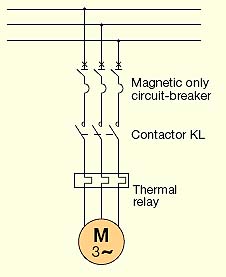
Рис. ABB
Схема прямого пуска электродвигателяMagnetic only circuit-breaker - Автоматический выключатель с электромагнитным расцепителем
Contactor KL - Контактор KL
Thermal relay - Тепловое реле
Параллельные тексты EN-RU
Direct-on-line starting
Direct-on-line starting, which is often abbreviated as DOL, is perhaps the most traditional system and consists in connecting the motor directly to the supply network, thus carrying out starting at full voltage.Direct-on-line starting represents the simplest and the most economical system to start a squirrel-cage asynchronous motor and it is the most used.
As represented in Figure 5, it provides the direct connection to the supply network and therefore starting is carried out at full voltage and with constant frequency, developing a high starting torque with very reduced acceleration times.
The typical applications are relevant to small power motors also with full load starting.
These advantages are linked to some problems such as, for example, the high inrush current, which - in the first instants - can reach values of about 10 to 12 times the rated current, then can decrease to about 6 to 8 times the rated current and can persist to reach the maximum torque speed.The effects of such currents can be identified with the high electro-dynamical stresses on the motor connection cables and could affect also the windings of the motor itself; besides, the high inrush torques can cause violent accelerations which stress the transmission components (belts and joints) generating distribution problems with a reduction in the mechanical life of these elements.
Finally, also the possible electrical problems due to voltage drops on the supply line of the motor or of the connected equipment must be taken into consideration.
[ABB]Прямой пуск
Прямой пуск, который по-английски часто сокращенно обозначают как DOL, является, пожалуй наиболее распространенным способом пуска. Он заключается в непосредственном (т. е. прямом) подключении двигателя к питающей сети. Это означает, что пуск двигателя осуществляется при полном напряжении.Схема прямого пуска является наиболее простым, экономичным и чаще всего применяемым решением для электродвигателей с короткозамкнутым ротором.
Схема прямого подключения к сети представлена на рисунке 5. Пуск осуществляется при полном напряжении и постоянной частоте сети. Электродвигатель развивает высокий пусковой момент при коротком времени разгона.
Типичные области применения – маломощные электродвигатели, в том числе с пуском при полной нагрузке.
Однако, наряду с преимуществами имеются и определенные недостатки, например, бросок пускового тока, достигающий в первоначальный момент 10…12-кратного значения от номинального тока электродвигателя. Затем ток двигателя уменьшается примерно до 6…8-кратного значения номинального тока и будет держаться на этом уровне до тех пор, пока скорость двигателя не достигнет максимального значения.
Такое изменение тока оказывает значительное электродинамическое воздействие на кабель, подключенный к двигателю. Кроме того пусковой ток воздействует на обмотки двигателя. Высокий начальный пусковой момент может привести к значительному ускорению и следовательно к значительной нагрузке элементов привода (ремней, крепления узлов), что вызывает сокращение их срока службы.
И, наконец, следует принять во внимание возможное возникновение проблем, связанных с падением напряжения в линии питания двигателя и подключенного к этой линии оборудования.
[Перевод Интент]
Тематики
Синонимы
EN
- across-the-line starting (US)
- direct line starting
- direct operation of a motor
- direct starting
- direct-on-line starting
- DOL
- full voltage starter application
DE
FR
пускатель прямого действия
Пускатель, одноступенчато подающий сетевое напряжение на выводы двигателя.
(МЭС 441-14-40)
[ ГОСТ Р 50030.4.1-2002 (МЭК 60947-4-1-2000)]
Пускатели переменного тока для прямого непосредственного пуска (с полным напряжением)
Пускатели, предназначенные для пуска двигателя, разгона его до номинальной скорости, защиты двигателя и подключенных к нему цепей от рабочих перегрузок и отключения питания двигателя.
[ ГОСТ Р 50030.4.1-2002 (МЭК 60947-4-1-2000)]EN
direct-on-line starter
a starter which connects the line voltage across the motor terminals in one step
[IEV number 441-14-40]FR
démarreur direct
démarreur qui applique la tension d'alimentation sur les bornes du moteur en une seule manoeuvre
[IEV number 441-14-40]Параллельные тексты EN-RU
Direct-on-line starters
Starters which connect the line voltage across the motor terminals in one step, intended to start and accelerate a motor to normal speed.
They shall ensure switching and protection functions as prescribed in the general definition.
[ABB]Пускатели прямого действия
Пускатели, одноступенчато подающие сетевое напряжение на зажимы двигателя и предназначенные для его пуска и разгона до номинальной скорости.
Кроме того, они должны обеспечивать коммутацию и защиту в соответствии с общим определением.
[Перевод Интент]Тематики
EN
DE
FR
эффект операционного рычага
эффект производственного рычага
Эффект операционного рычага - выражение того факта, что любое изменение выручки от реализации порождает изменение прибыли. Сила воздействия операционного рычага вычисляется как частное от деления выручки от реализации после возмещения переменных затрат на прибыль.
[ http://www.lexikon.ru/dict/fin/a.html]Тематики
Синонимы
EN
Англо-русский словарь нормативно-технической терминологии > DOL
- 1
- 2
См. также в других словарях:
Effects of MDMA on the human body — This article discusses the effects of MDMA (3,4 methylenedioxy N methylamphetamine, commonly known as Ecstasy ) on the human brain and body. More general information on MDMA, such as history and legal status, can be found in the main entry for… … Wikipedia
Effects of nuclear explosions — An American nuclear test. Nuclear weapons … Wikipedia
Effects of relativity on GPS — Relativity produces several measurable effects on the GPS System that uncorrected would render the system useless. The most common effect is on GPS time measurements. Each satellite in the GPS constellation carries one or more atomic clocks in… … Wikipedia
Effects of Hurricane Georges in Puerto Rico — The effects of Hurricane Georges in Puerto Rico were some of the worst since Hurricane Hugo in 1989. Hurricane Georges was the first hurricane to cross the entire island since the San Ciprian Hurricane in 1932. Georges formed on September 15 as… … Wikipedia
Effects-Based Operations — (EBO) is a United States military concept which emerged after the 1991 Gulf War for the planning and conduct of operations combining military and non military methods to achieve a particular effect. The doctrine was developed in light of the… … Wikipedia
These Are the Days (TV series) — These Are the Days Title card Genre Animated Voices of Frank Cady Micky Dolenz Moosie Drier Sam Edwards … Wikipedia
Effects of global warming — This article is about (primarily) effects during the 21st century. For longer term effects, see Long term effects of global warming. The variou … Wikipedia
Effects of domestic violence on children — Contents 1 The effects of witnessing domestic violence on children 2 Symptoms children may have while witnessing 3 Effects on Infants and Toddlers … Wikipedia
Effects of Hurricane Katrina in New Orleans — Hurricane Katrina 2005 Atlantic hu … Wikipedia
Effects pedal — An effects pedal (or a Stomp Box ) is an electronic effects unit housed in a small metal or plastic chassis used by musicians, usually electric guitar players, to modify their instrument sound. Musicians playing electronic keyboards,… … Wikipedia
Effects of stress on memory — The effects of stress on memory include interference with one’s capacity to encode and ability retrieve information.[1] When stress occurs, the body reacts by secreting stress hormones into the blood stream. Over secretion of stress hormones most … Wikipedia
